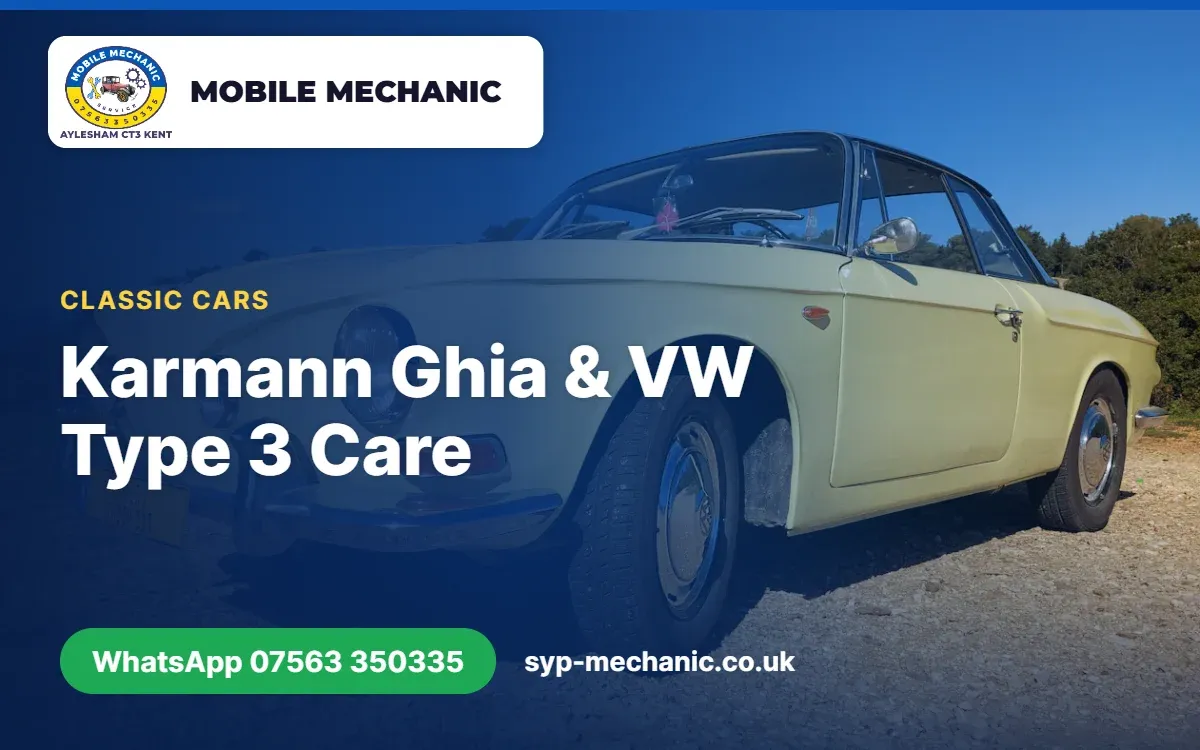
Karmann Ghia and VW Type 3 Maintenance: Rust, Engines, Parts
Written by Petro Olekhnovych, mobile mechanic in Aylesham, Kent
Karmann Ghia maintenance comes down to two things: keeping rust in check and looking after the air-cooled engine. The Type 14 Ghia uses Beetle mechanicals, so engine parts are easy to find. The rarer Type 34 Ghia and the Type 3 saloons use the flat “pancake” engine, which needs a little more know-how and has scarcer body parts.
Which car do you have?
It helps to know exactly what you own, because parts and engines differ.
- Karmann Ghia Type 14. The coupe and cabriolet built from the mid-1950s to 1974. It shares its chassis with the Beetle, with a wider floorpan, and its engine grew in step with the Beetle’s.
- Karmann Ghia Type 34. The “Razor Edge” Ghia, built from 1962 to 1969 on the Type 3 floorpan and drivetrain. Only 42,505 were made.
- VW Type 3. The Notchback saloon, Variant (Squareback) estate and Fastback, built in Germany from 1961 to 1973.
If you have a Type 14, much of our air-cooled VW servicing guide and our VW Beetle common problems post applies directly to your car.
Where Karmann Ghias and Type 3s rust
The Heritage Parts Centre buying guide puts it bluntly: “Ghias will rust everywhere!” Its list of places to check on a Ghia includes:
- Headlamp surrounds and the nostril vents in the nose
- Wheel arches, quarter panels and inner wings
- Door bottoms and sills
- The floor pan and jacking points
- Heater channels, especially where they meet the door pillars
- Bumper mounts, front and rear
- On cabriolets, the soft-top area, where leaks let water collect
On the Type 3, the same supplier’s guide adds some spots of its own:
- The bottom six inches of the body, which it calls a strong guide to overall condition
- The double-skinned front wings fitted from 1968, which trap moisture in the front boot area
- On Fastbacks, the C-pillars below the vents, where blocked drain tubes cause rot
- The spare wheel well, battery tray and fresh air box under the dashboard
What you can do: keep drain holes clear, dry the car before storing it, and check under carpets for damp. Rust in the heater channels or jacking points is structural. Get it looked at before it spreads. Living near the coast in east Kent makes this worse, so see our post on coastal car rust checks.
Classic car needs some care?
Servicing, recommissioning and mechanical restoration for older cars across Kent.
WhatsApp for a free quote Call 07563 350335
Labour £30 to £50 per hour depending on the job. Send your reg number and we will reply with a price before any work starts.
The Type 3 pancake engine
The Type 3 engine is often called the “pancake” or “suitcase” engine. It is a flat-four, like the Beetle’s, but low enough to fit under a luggage area at the back.
The big difference is cooling. On a Beetle, the cooling fan is driven by the generator. On the Type 3, the fan sits on the end of the crankshaft. So it is not just a Beetle engine laid flat, and it is worth using someone who knows the difference.
Things to keep an eye on:
- Oil leaks, smoke and poor starting. Classic & Sports Car lists oil leaks, fumes, a smoky exhaust, lost power and poor starting as signs an engine needs a rebuild.
- Cooling tinware and seals. The air-cooled engine relies on its tinware and seals to direct air over the cylinders. The Heritage Parts Centre Ghia guide says missing rubber seals can point to poor maintenance and a risk of overheating.
- Fuel injection. From 1968, some Type 3s had Bosch D-Jetronic electronic fuel injection, one of the first mass-produced injection systems. Classic & Sports Car notes many injected cars have been converted to carburettors because injection parts and expertise are expensive.
If the oil light comes on or the engine starts to run hot and smell, stop driving. Air-cooled engines can be badly damaged by overheating. For signs that a rebuild is due, read our post on air-cooled VW engine rebuilds.
Brakes, steering and electrics
Classic & Sports Car says the Type 3 range got front disc brakes in 1965, and moved to 12 volt electrics in 1966. Its buying checks include seized calipers and slave cylinders, perished flexible hoses, and play in the steering and suspension.
On any Ghia or Type 3, check that the car stops straight and the pedal feels firm. If it pulls or the pedal sinks, do not drive it until the brakes are checked.
Parts availability
Type 14 Ghia: mechanical parts are shared with the Beetle and are generally easy to find. Body panels, trim and seats are Ghia specific and harder to source.
Type 34 Ghia: very limited. The Heritage Parts Centre guide says rust repair panels, seals and trim are especially scarce.
Type 3: Classic & Sports Car says running gear is available and affordable, but some trim and body panels are almost unobtainable.
So on a Type 34 or Type 3, preventing rust is far cheaper than finding panels later.
How we can help
We are a mobile mechanic based in Aylesham, and we service and repair classic cars, including air-cooled VW engines. Our classic car mechanic service in Kent comes to you across Canterbury, Dover, Deal, Sandwich, Folkestone and nearby villages.
We can do servicing, oil changes, brake pads and discs, filters, fault finding and pre-MOT checks. For worn engines, we also do classic engine rebuilds in a Kent workshop. We do not do bodywork, but we can check the car over and tell you what needs attention.
Labour is £30-£50 per hour, depending on the job and its difficulty. We agree the price with you on WhatsApp before work starts. Parts are extra.
Frequently asked questions
Does a Karmann Ghia use a Beetle engine?
The Type 14 Ghia shares its engine and running gear with the Beetle. The Type 34 Ghia uses the Type 3’s flat pancake engine.
What is a VW pancake engine?
It is the low, flat Type 3 engine, with the cooling fan on the crankshaft instead of on the generator.
Where do Karmann Ghias rust most?
Common areas include the headlamp surrounds, nose vents, sills, heater channels, floor pan, jacking points and wheel arches.
Are Type 34 parts hard to find?
Yes. Rust repair panels, seals and trim for the Type 34 are very limited.
Need help? Send a WhatsApp to 07563 350335 with your car’s make and model and we’ll come to you.
Classic car needs some care?
Message us on WhatsApp with your reg and postcode for a price before any work starts.
WhatsApp for a free quote Call 07563 350335
Labour £30 to £50 per hour depending on the job. Send your reg number and we will reply with a price before any work starts.
