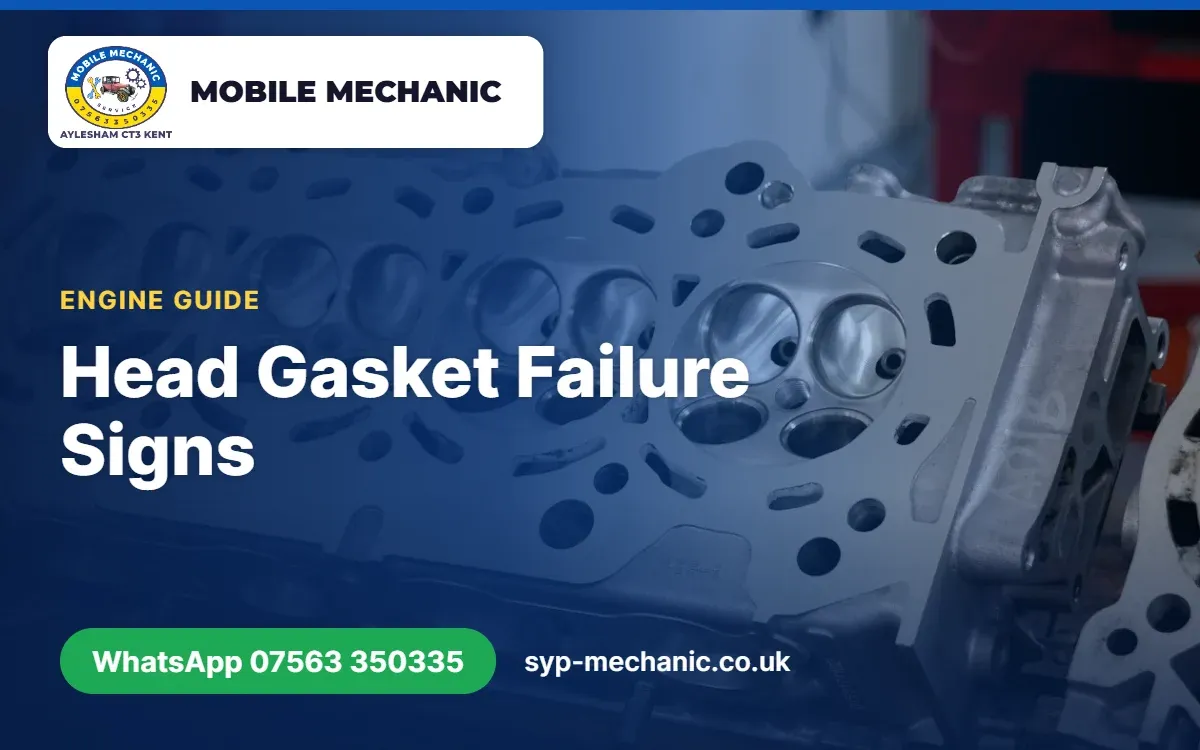
Head Gasket Failure: Symptoms and How It's Tested
Written by Petro Olekhnovych, mobile mechanic in Aylesham, Kent
What the head gasket does
The head gasket seals the joint between the cylinder head and the engine block. It keeps three things apart: the combustion pressure in the cylinders, the coolant passages and the oil passages. When it fails, one or more of those mix, and the symptoms depend on which.
The most common cause is overheating, often after a coolant leak, a failed water pump or a radiator fan fault that wasn't caught in time.
Symptoms to look out for
- Coolant disappearing with no drips under the car and no damp hoses.
- White exhaust smoke that keeps coming once the engine is fully warm, often with a sweet smell.
- Overheating or the gauge creeping up, especially under load or on a long climb.
- Bubbles in the expansion tank with the engine running.
- Top hoses rock hard soon after a cold start, because combustion gas is pressurising the system.
- Heater blowing cold as air pockets build up in the system.
- Misfire or rough running on cold start that clears as it warms, from coolant in a cylinder.
- Milky, creamy oil on the dipstick, or oil in the coolant.
Any one of these on its own has other possible causes. Two or three together make head gasket failure much more likely.
Engine problem or belt due?
Timing belts, water pumps, coolant and fault finding done at your door.
WhatsApp for a free quote Call 07563 350335 Contact form
Labour £30 to £50 per hour depending on the job. Send your reg number and we will reply with a price before any work starts.
Things that look like a head gasket but aren't
- White vapour on a cold morning is normal condensation and clears once warm. Our guide to white smoke on a cold start explains the difference.
- Mayonnaise under the oil cap is often condensation from short trips, especially in winter.
- Coolant loss can be a leaking water pump, radiator or heater matrix. See our coolant leak signs guide.
- Overheating can be a stuck thermostat or failed cooling fan.
- A failed EGR cooler on some diesels can also put coolant into the exhaust.
How a head gasket is tested
- Combustion gas test (block test). A tester draws air from above the coolant through a special fluid. If exhaust gases are present, the fluid changes colour. It's one of the clearest checks.
- Cooling system pressure test. The system is pressurised with a hand pump on a cold engine to see if it holds pressure or where it leaks.
- Compression test. Low readings on two neighbouring cylinders suggest the gasket has failed between them.
- Leak down test. Air is fed into each cylinder in turn, and bubbles in the coolant show a path into the cooling system.
- Oil and coolant inspection and checking fault codes for misfires or temperature sensor readings.
The cooling system is only ever opened with the engine cold, then the engine is run as each test requires.
What to do now
- Never open the coolant cap on a hot engine. The system is under pressure and can spray scalding coolant.
- Watch the temperature gauge. If it rises into the red or the warning light comes on, pull over safely and switch off. Our engine temperature warning light guide explains what to do at the roadside.
- Don't keep topping up and driving for weeks. Repeated overheating can warp the head and turn a gasket job into a cylinder head or engine replacement.
- Be wary of sealant products as a long term fix. They can sometimes slow a small leak, but they can also block radiators and heater matrices.
How we can help
We can carry out head gasket testing at your home or workplace: combustion gas test, pressure test, compression check and a code scan, so you know for certain before spending money. We'll then explain the options honestly, including whether the repair is worth it on your car and whether it's something we can take on. Labour is £30 to £50 per hour depending on the job, and we quote before any work starts. Send your reg and postcode on WhatsApp 07563 350335 or use our contact page.
Engine problem or belt due?
Message us on WhatsApp with your reg and postcode, or use our contact form, for a price before any work starts.
WhatsApp for a free quote Call 07563 350335 Contact form
Labour £30 to £50 per hour depending on the job. Send your reg number and we will reply with a price before any work starts.
Frequently asked questions
What are the first signs of a blown head gasket?
Common early signs are coolant dropping with no visible leak, white exhaust smoke that doesn't clear once the engine is warm, bubbles in the expansion tank and the temperature gauge creeping up.
Can I drive with a blown head gasket?
It is not recommended. Overheating can warp the cylinder head and coolant in the oil can ruin the bearings, turning one repair into a much bigger one. Stop if the temperature gauge rises.
Does mayonnaise under the oil cap mean head gasket failure?
Not always. On cars used for short trips it is often just condensation. It is more worrying alongside coolant loss, overheating or milky oil on the dipstick.
How is a head gasket tested?
Usually with a combustion gas test on the coolant, a cooling system pressure test and a compression or leak down test. Together they show whether combustion gases, coolant or oil are crossing where they shouldn't.
